Formulation Development is the scientific discipline that transforms a drug substance with demonstrated biological activity into a drug product that can be manufactured reproducibly, administered safely, and delivered to the target site in the body with the required pharmacokinetic profile. It is a process that spans years and multiple phases of development, and the decisions made in the earliest stages of pre-formulation have consequences that extend through clinical trials, regulatory submission, and commercial launch.
For pharmaceutical and biotechnology companies advancing drug candidates through development, the choice of formulation development partner is one of the most consequential decisions in the development program. A CDMO with the scientific depth to support pre-formulation work, the analytical capabilities to characterize formulation performance rigorously, and the GMP manufacturing infrastructure to produce clinical trial materials on the timelines that clinical programs demand provides an integrated pathway from early science to first-in-human studies that a collection of separate vendors cannot replicate.
Quality Chemical Laboratories has built its formulation development capabilities around exactly this integrated model since its founding in 1998. What follows is a detailed picture of how QCL approaches formulation development across its stages, and why the integration of formulation science, analytical capability, and GMP manufacturing under one roof delivers outcomes that matter to development programs.
Pre-Formulation: The Scientific Foundation That Determines Everything Downstream
Pre-formulation studies establish the physicochemical and biopharmaceutical properties of a drug substance that will define the feasible formulation space and guide every subsequent development decision. Conducted before formal formulation development begins, pre-formulation work is the investment that prevents expensive failures later in the program.
The core pre-formulation characterization package covers solubility across the physiological pH range, intrinsic dissolution rate, hygroscopicity, polymorphic form identification and interconversion behavior, photostability, thermal stability, and compatibility with common excipients. Each of these properties constrains or enables specific formulation approaches, and understanding the full property profile before committing to a formulation strategy prevents the discovery mid-development that the chosen approach has a fundamental incompatibility with the drug substance.
Solubility characterization is frequently the most consequential pre-formulation finding for oral drug products. A poorly soluble drug substance, classified as BCS Class II or IV, requires formulation strategies that enhance dissolution and absorption, including particle size reduction, amorphous solid dispersions, lipid-based formulations, or salt form selection. Each of these approaches has its own development path, stability implications, and manufacturing requirements. Identifying the solubility class early and selecting the appropriate enhancement strategy at the pre-formulation stage, rather than discovering the solubility liability after a conventional formulation has already been advanced, saves significant time and resources.
Solid form screening, which evaluates the salt forms, polymorphs, hydrates, and solvates of a drug substance, is an area where the consequences of inadequate pre-formulation work are well documented in the pharmaceutical literature and in regulatory history. A polymorphic transformation during manufacturing or storage that converts a thermodynamically metastable but pharmaceutically acceptable form to a more stable but less soluble form can result in loss of bioavailability, failed stability studies, and, in severe cases, the failure of a regulatory submission that was built on data from the intended form. Understanding the solid-state landscape of a drug substance before it is locked into a formulation is the scientific foundation of a development program that will not encounter these failures.
Oral Solid Dosage Form Development: Where QCL’s Formulation Expertise Is Most Extensive
QCL’s formulation development capabilities are deepest in oral solid dosage forms, reflecting the continuing dominance of tablets, capsules, and related dosage forms in the pharmaceutical pipeline. The expertise covers the full spectrum of oral solid technology platforms: immediate release, modified release including extended release and delayed release, enteric-coated formulations, film-coated tablets, mini-tablets, and oral dispersible formulations designed for pediatric or geriatric populations with swallowing difficulties.
Taste masking is a formulation challenge that receives less attention in the literature than it deserves, given its practical importance for patient compliance. For drugs with significant bitterness or astringency, taste masking is not a cosmetic consideration but a clinical one: a formulation that patients find unpalatable will not be taken as prescribed, and the therapeutic benefit of the drug cannot be realized. QCL’s taste masking expertise encompasses the range of available approaches from coating technologies to cyclodextrin complexation to ion exchange resin systems, with the selection guided by the specific sensory properties of the drug substance and the target patient population.
Controlled release formulation development at QCL is supported by the analytical infrastructure needed to characterize the performance of modified release systems rigorously. In vitro dissolution testing using both USP Apparatus 1 and Apparatus 2 provides the dissolution profile data that predicts in vivo behavior and supports the in vitro-in vivo correlation work that regulatory agencies expect for modified release products. The connection between dissolution method development, formulation optimization, and stability evaluation is managed within QCL’s integrated laboratory environment rather than across the interfaces between separate organizations.
Aqueous film coating and enteric coating capabilities at QCL allow formulation scientists to optimize coating processes at laboratory scale with the understanding of how those processes will perform at scale-up batches that precede clinical trial material manufacture. The translation from bench to GMP manufacturing is a critical step where formulations that perform well at small scale sometimes reveal process sensitivities that were not apparent earlier. QCL’s experience with this transition, built across a large number of development programs, informs the formulation decisions made at the laboratory scale in ways that reduce the risk of surprises at the manufacturing scale.
Parenteral Formulation Development: Supporting the Pipeline’s Fastest Growing Segment
Injectable drug products represent an increasing share of the pharmaceutical development pipeline, driven by the growth of biologics, the expansion of oncology indications where parenteral administration is standard, and the emergence of gene and cell therapy products that require specialized delivery systems. QCL’s formulation development capabilities for parenterals are expanding in parallel with the industry’s needs, supported by the sterile fill/finish and lyophilization infrastructure that was launched as part of QCL’s facility expansion.
Parenteral formulation development encompasses a distinct set of scientific challenges from oral solid dosage form work. The formulation must be sterile, must be free of particulates above defined thresholds, must be compatible with the container-closure system and any administration equipment it will contact, and must maintain these properties throughout its shelf life. For protein-based biologics, the additional challenge of maintaining the three-dimensional structure and biological activity of the molecule through the stresses of manufacture, fill, and storage requires formulation strategies that are fundamentally different from small-molecule parenteral development.
Lyophilization, or freeze-drying, is the preservation technology used for protein biologics and other drug substances that lack the solution stability required for a liquid formulation with an acceptable shelf life. The lyophilization cycle development process, which optimizes the freezing, primary drying, and secondary drying conditions to produce a stable, elegant cake that reconstitutes rapidly and completely, is an area requiring specialized scientific expertise and a clear understanding of the relationship between the formulation properties, the processing conditions, and the stability of the final product. QCL’s lyophilization capabilities support this development work with the rigor that biologics development demands.
Clinical Trial Material Manufacturing: Turning Formulation Science into GMP Reality
The transition from formulation development to clinical trial material manufacture is where the scientific work of pre-formulation and formulation development becomes concrete for a drug development program. The materials produced in QCL’s GMP manufacturing facility are the same materials that will be administered to patients in Phase I and Phase II clinical trials, and the quality of those materials, the rigor of the manufacturing documentation, and the reliability of the supply chain are the direct expression of everything that preceded them in the development program.
QCL’s GMP manufacturing facility supports a broad range of dosage form technologies, with capabilities including an automated encapsulator, tablet presses supporting both standard and bi-layer formulations, cold form and thermoform blister packaging with nitrogen overlay capability, and bottling with induction seal. These capabilities are designed around the reality that clinical programs require flexibility in dosage form design and packaging configuration, and the ability to accommodate that flexibility within a single GMP environment significantly reduces the coordination burden and timeline risk that come with engaging multiple manufacturers.
The clinical trial material supply challenge is rarely just a manufacturing challenge. It is a timeline challenge, a quality system challenge, and a regulatory documentation challenge simultaneously. QCL’s history of delivering clinical trial materials on aggressive timelines reflects the organizational structure of the company: formulation scientists, analytical chemists, and manufacturing personnel work within the same facility and communicate directly rather than across organizational boundaries that slow decision-making and introduce handoff errors. When a formulation modification during manufacture requires immediate analytical input, that input comes from scientists who are physically adjacent and scientifically engaged with the program rather than from a separate CRO managing the analytical scope independently.
The Analytical Foundation That Makes Formulation Development Rigorous
Formulation development without robust analytical support is guesswork. The ability to characterize formulation performance, identify degradation products, assess stability, and confirm the identity and quantity of the drug substance and its excipients across every stage of development requires the full range of analytical development capabilities that QCL has built over more than two decades of pharmaceutical testing and development work.
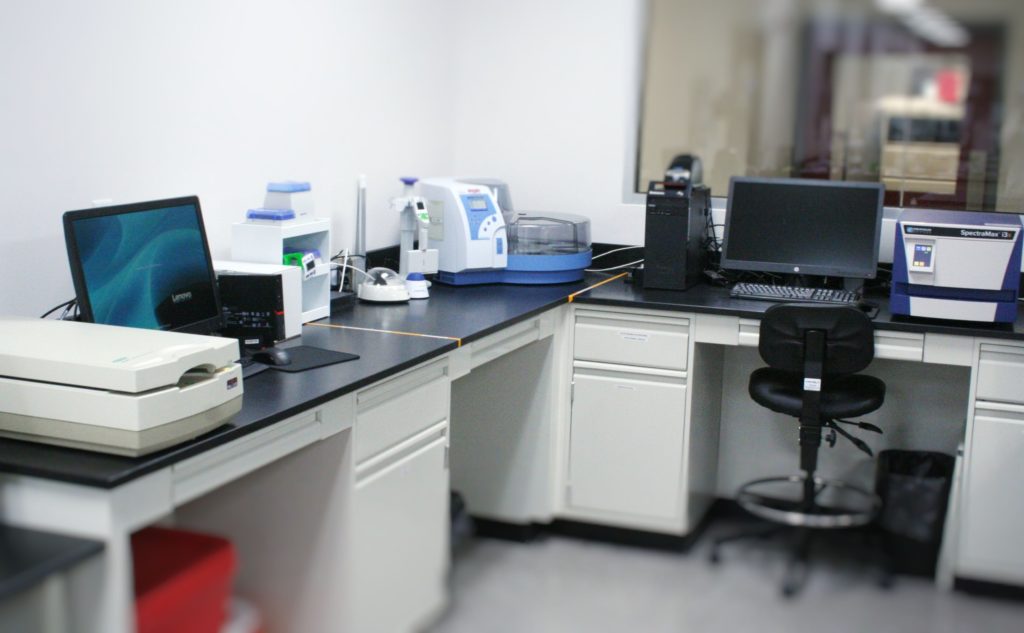
Method development for formulation characterization at QCL draws on a platform of over 100 HPLCs with a variety of detectors, UPLCs, LC-MS systems, dissolution apparatus, and specialized instrumentation for physical characterization, including XRPD and particle size analysis. The method development team works in close coordination with the formulation scientists to ensure that the analytical methods developed are stability-indicating, that they are capable of detecting and quantifying the specific degradation products that pre-formulation stress studies identified as potential concerns, and that they are fit for the purpose of supporting regulatory submissions.
For drug products containing elemental impurities, QCL’s impurity analysis capabilities include ICP-MS for elemental impurity testing per ICH Q3D and USP requirements. The identification and quantification of elemental impurities in formulated drug products is increasingly expected as part of the regulatory submission package, and QCL’s experience in designing risk assessments and conducting the required testing supports this regulatory requirement as an integrated component of the formulation development program rather than a separate scope item.
Why Integration Matters: The QCL Model in Practice
The value of QCL’s integrated formulation development and manufacturing model is most clearly expressed in terms of the outcomes it enables for drug development programs operating under the time and resource constraints that are the reality for most pharmaceutical and biotechnology companies today.
Programs that begin pre-formulation work at QCL with the intention of progressing to clinical trial material manufacture within the same organization benefit from the continuity of scientific knowledge across the transition. The scientists who characterized the physicochemical properties of the drug substance in pre-formulation are aware of those properties when formulation prototypes are being designed. The formulation scientists who developed the manufacturing process are available for consultation when the manufacturing team encounters a process question during GMP batch production. This continuity of knowledge is not a minor convenience. It is a fundamental risk mitigation for a development process where unexpected findings at any stage can require a rapid scientific response.
QCL’s approach, grounded in treating clients as partners and taking ownership of client challenges as its own, is expressed most concretely in the formulation development and manufacturing work that sits at the intersection of science, quality, and timeline. When a formulation challenge requires working through weekends to meet a clinical supply deadline, QCL’s team does that work. When a stability result requires an unexpected investigation that could delay a regulatory submission, QCL scientists engage with that investigation with the same urgency as if the submission were their own.
For organizations seeking a CDMO partner for formulation development and clinical trial material manufacturing, QCL’s capabilities, scientific depth, and organizational approach represent a differentiated option in the contract development landscape. To discuss your specific program requirements or to request a capabilities overview, contact QCL’s business development team at businessdev@qualitychemlabs.com or call (910) 796-3441. You can also submit a request for a quote, and a member of our team will respond promptly.